
Debt Financing for Mergers and Acquisitions
Introduction to Debt Financing for Mergers and Acquisitions
Mergers and acquisitions, also known as M&A, is the combining of two companies through some form of financial transaction, such as mergers, acquisitions, tender offers and consolidations. In a merger, two or more companies merge their operations and become one entity. On the other hand, in an acquisition, one company acquires another company, and the acquired company becomes a subsidiary of the acquiring company.
In today’s business environment, where financial information drives investment and lending decisions, the ability to spot creative accounting practices is an essential skill for analysts, auditors, and investors. Recognizing early warning signs, or red flags, in financial statements can help prevent poor decisions, reduce exposure to fraud, and ensure a clearer understanding of a company’s real financial position.
What is Merge?
“A merger is when two or more companies combine into one single company.”
A merger is an agreement undertaken to unite two prevailing organizations into one new entity. There are numerous reasons why a company chooses to unite with another company. The primary reasons for mergers include expanding the company’s reach, gaining market share, or expanding into new segments. The company conducts these activities to please the shareholders.
What is motive of mergers?
Mergers are most commonly done to gain market share, reduce operational costs, expand to new territories, unite common products, grow revenues, and increase profits all of which should benefit the firms' shareholders. After a merger, shares of the new company are distributed to existing shareholders of both original businesses.
Example of Mergers
After Reliance Jio entered in 2016 with free data & cheap tariffs, the telecom industry faced a price war. Vodafone and Idea were losing market share and profits they both were struggling then they decide to merged with Idea Cellular and Vodaphone form Vodafone Idea Ltd.
Acquisitions
“An acquisition is which one company purchases and takes control of another company by buying most or all of its shares or assets”
Acquisition is a financial transaction that occurs when one business acquires the majority or all of its target’s shares. The goal of an acquisition is to gain control of the target’s operations, including its assets, production facilities, resources, market share, customer base, and other elements.
What is motive of mergers?
The main motive of acquisitions is to achieve faster growth, expand market share, gain synergies, access new technologies or talent, diversify business risk and strengthen competitive position.
Example of Acquisitions
In 2008 Tata Motors, an Indian automaker wanted to expand its product portfolio and diversify its market base. It acquired the two iconic British brands Jaguar and Land Rover from the American automaker Ford Motor Corporation.
Debt Financing
Debt financing is the type of financing in which companies obtain money for financing various business needs by issuing debt instruments and taking loans from banks or other financial institutions.
Debt Financing is which is one of the types of financing entities like companies obtain finance by issuing debt instruments or borrowing money from sources like a bank.
Types of Debt Financing
Bank Loan -
A loan occurs when entities like banks and other financial institutions lend money to business entities.
Bonds and Debentures –
Bonds and debentures are common debt financing instruments issued by the government and corporate entities to raise capital.
Factoring-
Factoring is an example of a debt instrument used to create short-term solutions. Factoring involves entities selling the accounts receivables in their books to a third party to obtain short-term liquidity.
Why need Debt Financing for Merger and Acquisitions
Debt financing for mergers and acquisitions remain one of the fastest ways for businesses to scale, diversify, and enter new markets. But closing deals requires significant capital and equity alone often isn’t enough.
Debt financing helps for increase capital requirement for merger and acquisitions. Companies are using debt fund can increase potential returns on equity if the acquisition perform well. Debt can be structured in different ways: term loans, bonds, mezzanine financing, or bridge loans, making it flexible for the company’s financial planning.
Why Choose Debt?
- • Tax-deductible interest payments lower the effective cost.
- • Preserves existing shareholder ownership.
- • Can enhance returns through financial leverage.
- • Keeps cash available for operations and other investments.
Debt financing advantages for M&A
There is no dilution of ownership, or the creditor has no say in the debtor's business decision making. Repayment of the loan or crossing the debt instrument's maturity date and completing the payment of interest and principal ends the obligation towards the creditor. The interest expense can reduce the tax liability.
It's easy to access and less costly compared to other forms of financing like equity financing. The decision to use cash, debt, or equity in M&A financing ultimately hinges on balancing cost, risk, and strategic objectives. While cash offers simplicity and control, debt can provide tax advantages, and equity enables risk-sharing.
The most successful acquirers often combine these methods strategically, crafting financing structures that complement their goals while maintaining financial flexibility.
Conclusion
Debt financing plays a crucial role in mergers and acquisitions by providing the necessary funds to acquire or merge with another company without diluting ownership. It allows firms to leverage their future cash flows to generate higher returns, benefit from tax advantages, and execute strategic deals quickly. While it increases financial risk due to interest and repayment obligations, when managed properly, debt financing becomes an effective tool for growth, expansion, and enhancing competitive strength in the market.
Financial Modeling Certification
The Financial Modeling Certification program is designed to provide you with in-demand industry knowledge, hands-on practice, and confidence to stand out and become a world-class financial analyst.
Enroll Now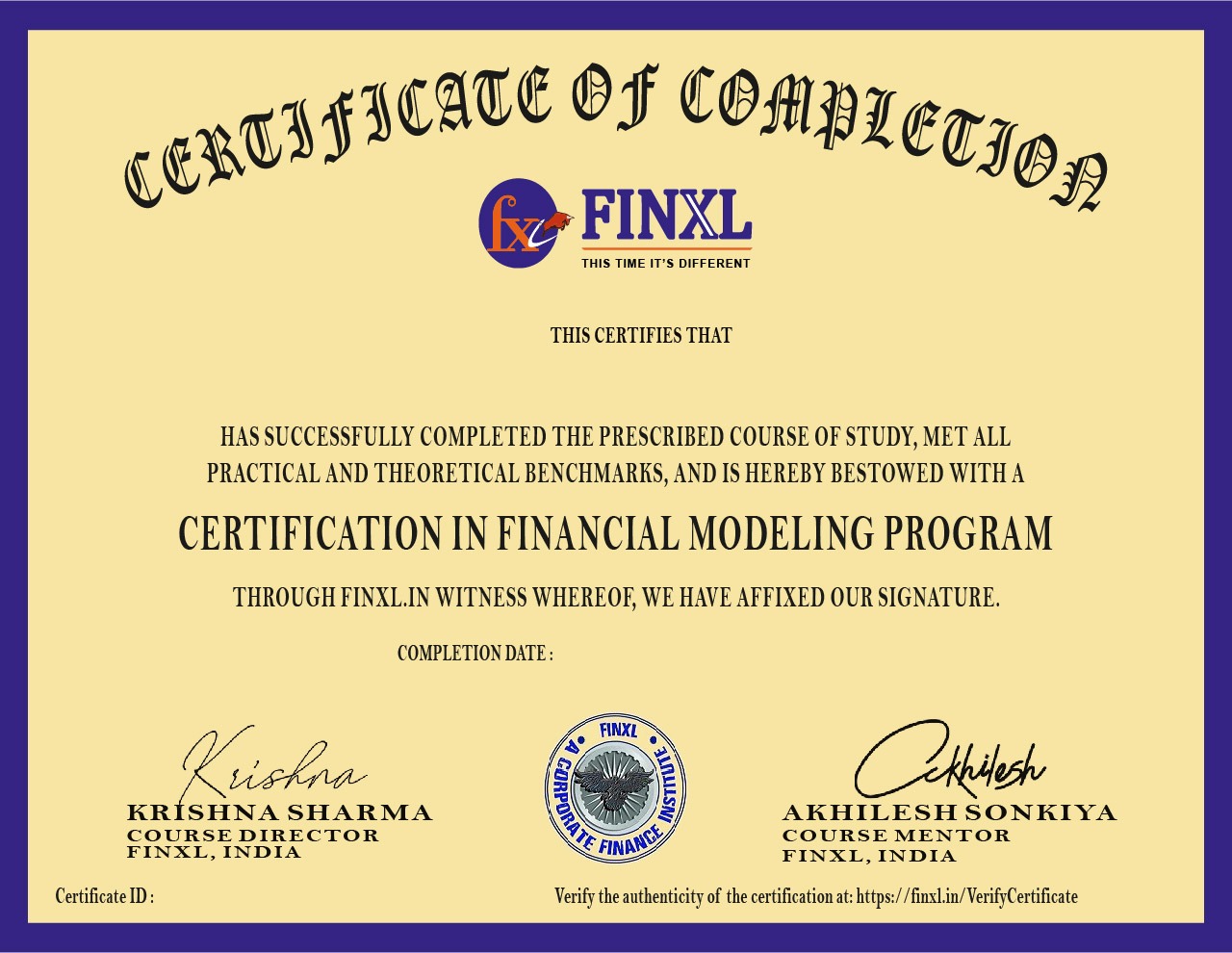
Submit an Enquiry




Verification


WARNING!
Your certificate number is not verified.
Certificate number is not valid. Please try again or contact to admin.
Call us: +91 915888 2688
OR
Email us: info@finxl.in

This certified that
has successfully completed the course in
and completion date is