Become a Job-Ready Financial Analyst Professional
Gain hands-on experience in budgeting, forecasting, variance analysis, management reporting and Power BI dashboards through practical projects and mentor-led sessions.
⭐ Trusted by 15,000+ Learners & Working Professionals
0
Students Trained
0
Hiring Partners
0
Placement Success (%)
Learn from ex-Big4 finance experts • Build 7+ real financial models • Become job-ready in 90 days
🎯 Attend a free counselling session & get career roadmap for finance roles
100% Placement Assistance — Real Results, Real Offers
We support you from hands-on projects to interviews — until you land the role.
Training & Analyst Projects
Hands-on budgeting, forecasting & dashboard projects employers value.
Mock Interviews
10+ mocks including technical case rounds, resume & LinkedIn optimisation.
Guaranteed Interviews
We schedule interviews with corporate FP&A, analytics & consulting partners.
Placed Student's Reviews
Hiring Partners




































Our Students Placed At

Ankita Das
Sr. Analyst

Ashish Patil
Finance Analyst

Vikas Kumar
Sr. Financial Analyst

AKSHAY NALAWADE
CONSULTANT


AKASH JAMDADE
PMO ANALYST


SHUBHAM LIMBALE
FINANCIAL ANALYST

Aditi
MANAGER

ASHWIN SHENDE
EXECUTIVE

TEJAS BABAR
EXECUTIVE

ROHIT CHINDALE
FINANCE

RUSHAD KOLI
ASSOCIATE

SHRADDHA PATIL
Sr. Financial Analyst


PRITAM SHINDE
ANALYST

SWAPNIL SHEDGE
FINANCIAL ANALYST

BALAJI MUNDE
ASSOCIATE

ASHVINI KAKULTE
Analyst

SHARVARI SHIRGIRE
FINANCIAL ANALYST


MANISHA GURUBAXANI
FINANCE EXECUTIVE

KALYANI GIRASE
FINANCIAL EXECUTIVE

PRATIKSHA SALUNKHE
FINANCIAL ANALYST
1-Year Financial Analyst Course & Certification
This 1-year, job-oriented Financial Analyst Course is designed to make you fully job-ready for FP&A, Corporate Finance, Reporting & Analytics roles. You work on real monthly cycles, forecasting, budgeting and BI dashboards—exactly how analysts work in corporates.
Full Financial Modelling Curriculum
Build 7+ industry models including revenue forecasting, cost scheduling, working capital, cash flow modelling and valuation frameworks used in corporates.
Advanced Excel + Power BI Mastery
Master Excel automation, Power Query, DAX, dashboards and MIS reporting used daily by FP&A teams.
Monthly Reporting & Forecasting Cycles
Experience real FP&A workflow: month-end closing, variance analysis, management reporting, rolling forecasts and budget planning.
Corporate Finance Projects
Work on long-term projects including operating models, scenario analysis, cost optimization studies and business financial health reviews.
Guaranteed Interview Support
Interview preparation starts only after long-term skill development. We schedule interviews with FP&A, corporate finance and analytics teams until you get placed.
Your Placement Journey in FINXL
Enroll in Program
Begin your journey with expert mentors.
Financial Analyst
Live classes with hands-on 3-statement models, DCF valuation and equity research projects.
Resume + Mock Interviews
Profile building + 10+ mock rounds.
Interview Scheduling
Guaranteed interview line-up.
Placed Successfully
You land the job you trained for!
Why FINXL Is Better for Aspiring Financial Analysts
Why Thousands Choose FINXL for Financial Analyst Course
Practical Features Designed for Analyst Success
FP&A-Focused Curriculum
Master budgeting, forecasting, variance analysis and monthly close models used by corporates.
Power BI & Reporting
Build interactive dashboards and automate management reporting for data-driven decisions.
Experienced Mentors
Learn from ex-FP&A professionals, Big 4 financial consultants and corporate finance experts.
Real Company Projects
Work on budgets, forecasting cycles, management packs and driver-based models from real companies.
Job-Ready Skill Set
Develop skills most sought-after by FP&A, corporate finance and analytics teams.
Industry Certifications
Earn certifications in Financial Analysis, Financial Modelling and Power BI for Finance.
Curriculum Designed for Financial Analyst Course
- Excel Essentials & keyboard accelerators
- Basic & advanced Excel functions
- Conditional Formatting, Paste Special
- Using VLOOKUP/HLOOKUP/ Match Index
- Using SUMIF, COUNTIF, AND AVERAGEIF
- DATEDIF, YEAR, YEARFRACE & MONTH
- Index, Search, Choose, offset
- Sensitivity analysis with Data tables
- Pivot table, Charting commonly used
- Dashboards, templates, Macros
- Financial Statement Preparation
- Accounting Software
- Bank Reconciliation Statement
- Sources for authentic financial data for US, India, China, Germany, and Singapore companies
- Tricks to collect data in the shortest time
- Data collection & Data structuring for model
- Understanding of Financial Reports & their types
- Types of filing 10-K, 10-Q, 8-K, 20-F etc
- Create a Model template for 5 years of historical data for
- Revenue Drivers
- Cost Drivers
- Income statement
- Balance sheet
- Cash flow statement
- Dividend schedule
- Asset Schedule
- Debt Schedule
- Equity Schedule
- Efficient Data Collection Techniques
- Financial Report Analysis
- Integrated Financial Model Building
- Historical Data Templating
- Finance principles and processes (e.g. financial management concepts, corporate finance activities, etc.)
- General financial concepts and common financial formulas (e.g. time value, opportunity costs, debt structures and covenants, earnings per share, cost of capital, etc.)
- Financial accounting concepts, principles, and practices
- Interactions/ interrelationships of common financial statements
- Basic microeconomics (e.g. marginal costs, pricing, price elasticity of supply and demand, etc.)
- Managerial accounting/reporting and cost accounting concept
- Financial Principle Application
- Accounting Concept Mastery
- Financial Statement Interrelation Analysis
- Microeconomic Decision Making
- Cost Accounting Proficiency
- Interlinking of financial statements (IS, BS, CFS)
- Tallying the balance sheet in 30 minutes
- Use best practices in Financial Model building
- Understand & develop a forecasting basis for each line of IS, BS & CFS
- Build & Forecast Advanced Schedules including the following points
- Debt Repayment Schedule (DRS)
- Fixed Assets Module (FAM)
- Dividend & Equity Schedule (ES)
- RATIOS: In-depth conceptual understanding of financial ratios, we include the following points
- Liquidity ratios
- Leverage ratios
- Efficiency ratios
- Profitability ratios
- Market value ratio
- Calculation and analysis of ratios on your chosen company
- Compare your company's ratios with competitors
- DUPONT analysis
- VALUATION: (Understanding of various Valuation methods)
- DISCOUNTED CASH FLOW (DCF)
- In-depth step-by-step understanding of DCF
- Product/business/economic life cycle concepts
- Time value of money concepts
- Understanding & calculation of FCFF & FCFE
- Cost of Equity using the Capital Asset Pricing Model (CAPM)
- Cost of Debt (Kd)
- Cost of preference shares (Ke)
- The risk-free rate of return (Rf) for listed & non-listed SMEs
- In-depth analysis of systematic & unsystematic Risk
- Beta, levered & Un-levered beta
- Calculate beta(β) using the last 5 years' price
- Cost of capital (WACC)
- Market Premium (Rm)
- Net present value /company value
- Sensitivity analysis
- Application of DCF on your chosen company
- ’Buy' or a 'Sell' rating based on analysis
- Financial Statement Integration
- Advanced Financial Modeling
- Ratio Analysis and Interpretation
- DCF Valuation Techniques
- Risk Assessment and Sensitivity Analysis
- Getting Started with Financial Planning
- The Accounting Framework
- Financial modeling
- Corporate financial planning/strategic planning
- GATHERING & INTERPRETING INFORMATION
- Sources of historical information and historical financial data and corporate structure and functions
- Sources of information about a company's business environment (e.g. business models, financial ratios, and industry metrics)
- Reading and interpreting corporate annual reports
- Determining peer groups and competitors
- Basic macro-economic concepts used in financial planning (e.g. consumer price index, gross domestic product, exchanges rates, interest rates, inflation rates, economic indicators, etc
- Implications of tax policies on Projections
- Risk Factors and risk management concept
- Financial and non-financial key performance indicators (KPIs)
- Strategic planning concepts and frameworks include the following points:
- SWOT Analysis
- Porter's five forces model
- Growth share matrix
- Determining information needs for and gathering information from internal/external stakeholders and business partners
- Tools for information gathering (e.g. templates, surveys, etc.)
- Strategic Financial Planning
- Information Gathering and Interpretation
- Macro-Economic Analysis
- Risk Management Strategies
- KPI Development and Monitoring
Tools You Will Learn in Financial Analyst Course





Work on Real-World Analyst Projects
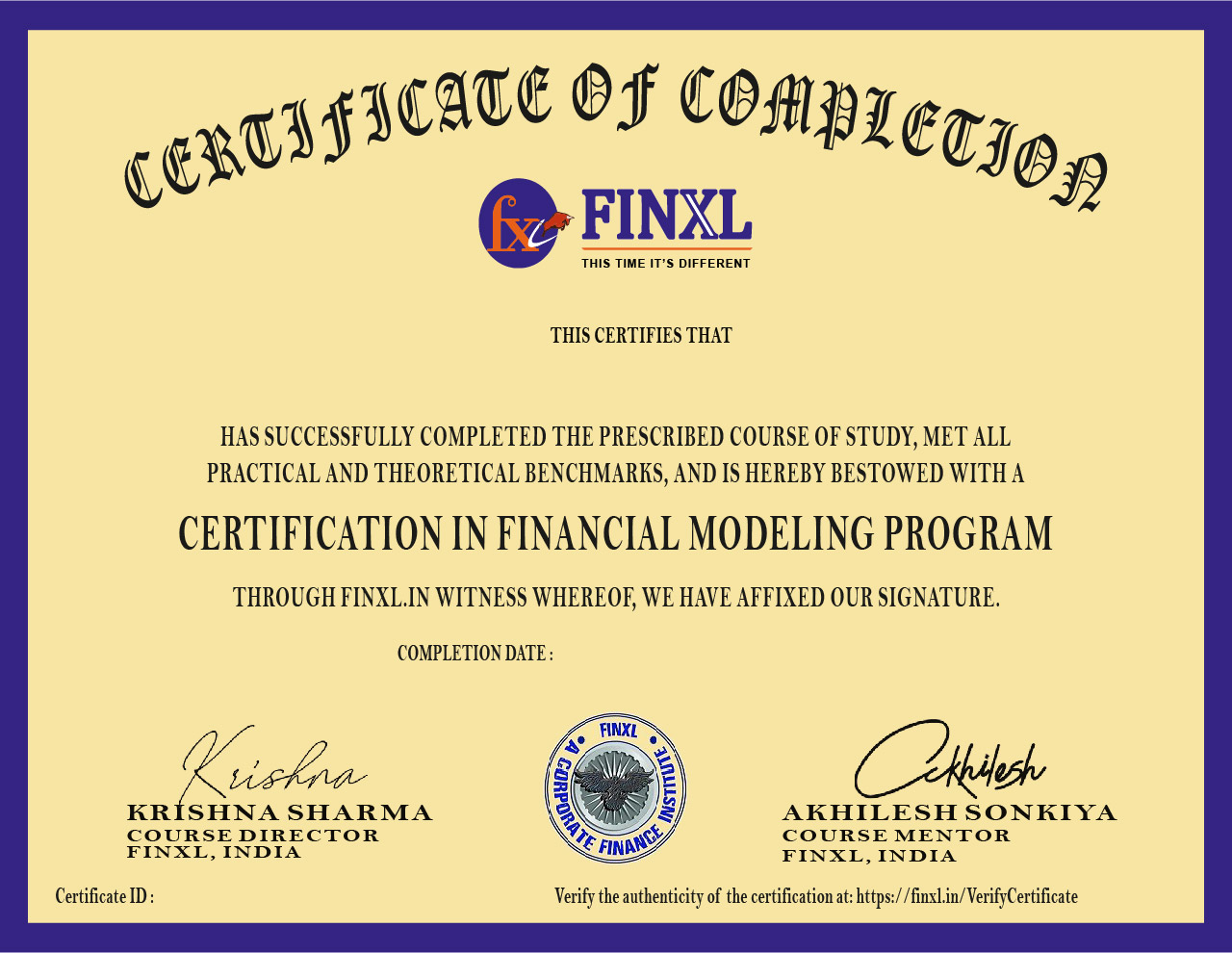
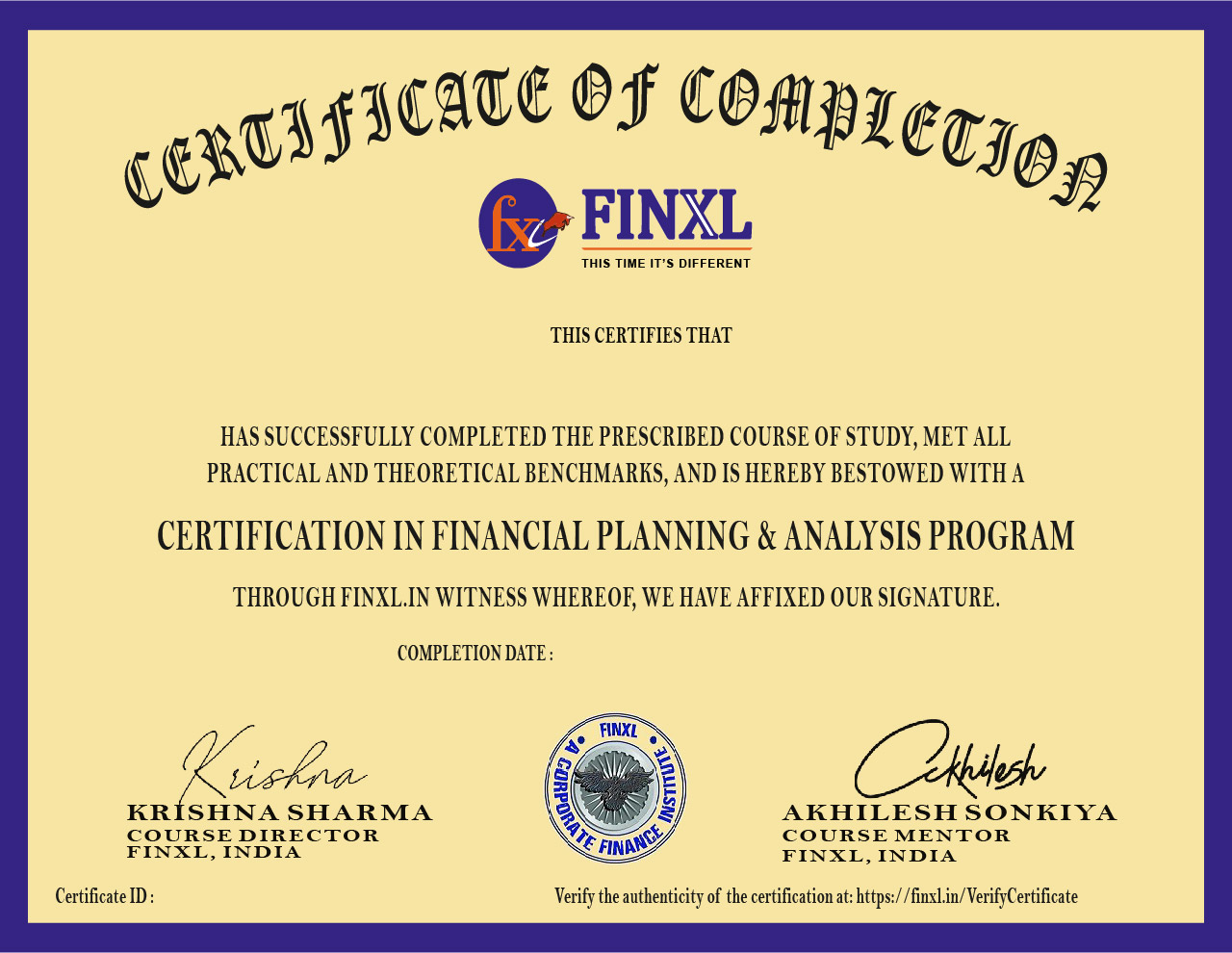
Earn 5 Industry-Recognized Certifications
Upon successfully completing the 1-Year Financial Analyst Program, you will receive five professional certifications validating your expertise across Financial Analysis, FP&A, Modelling, Reporting, and Analytics.
-
✔ Financial Modelling, Equity Research & Valuation Certification
– 3-statement models, forecasting, DCF & comps, equity research reports. -
✔ Financial Planning & Analysis (FP&A) Certification
– Budgeting, forecasting, variance analysis & management reporting. -
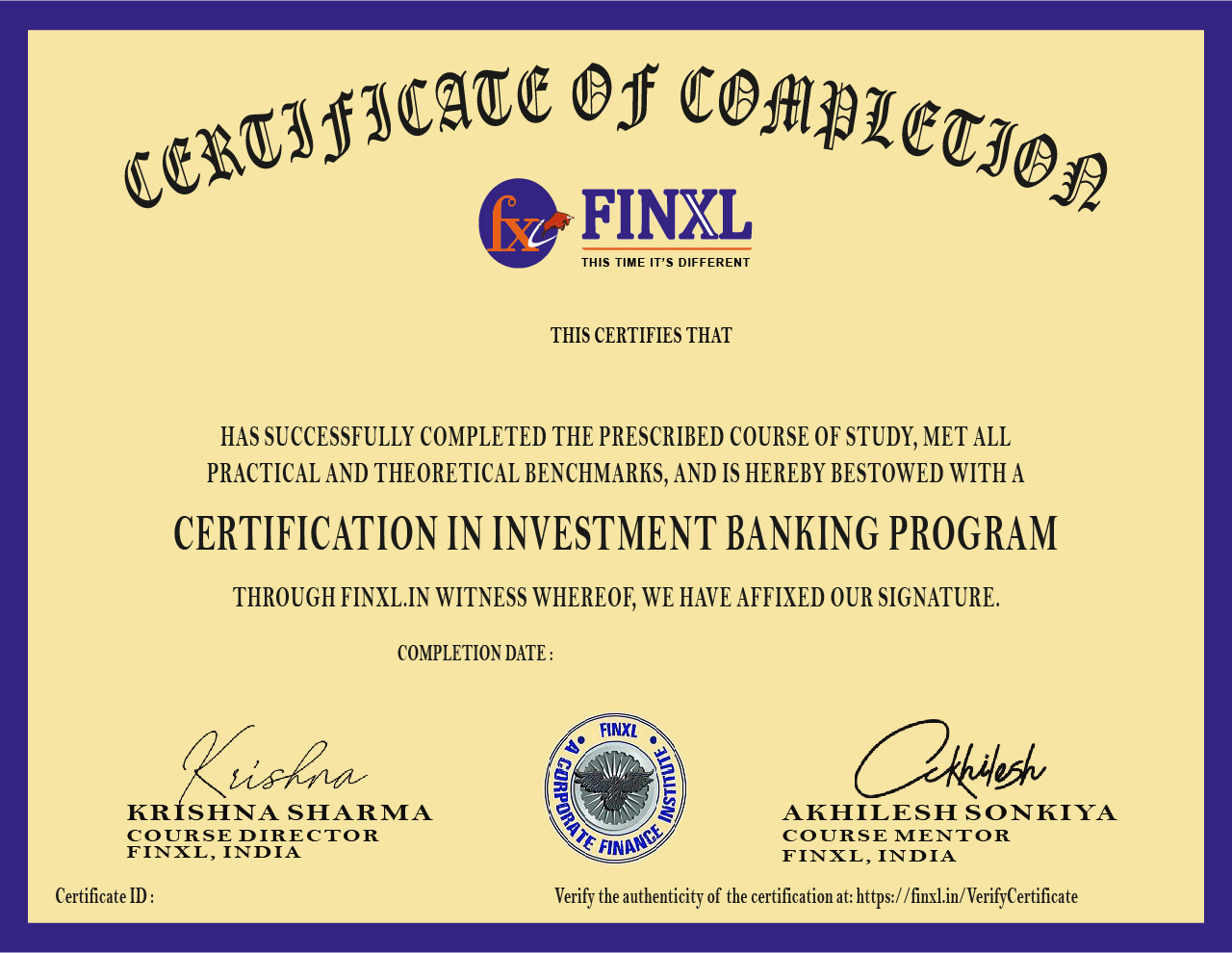
✔ Investment Banking Fundamentals Certification
– Valuation concepts, pitchbooks, transaction analysis & deal basics. -
✔ Power BI for Financial Analysts Certification
– Financial dashboards, MIS automation, KPI & performance reporting. -
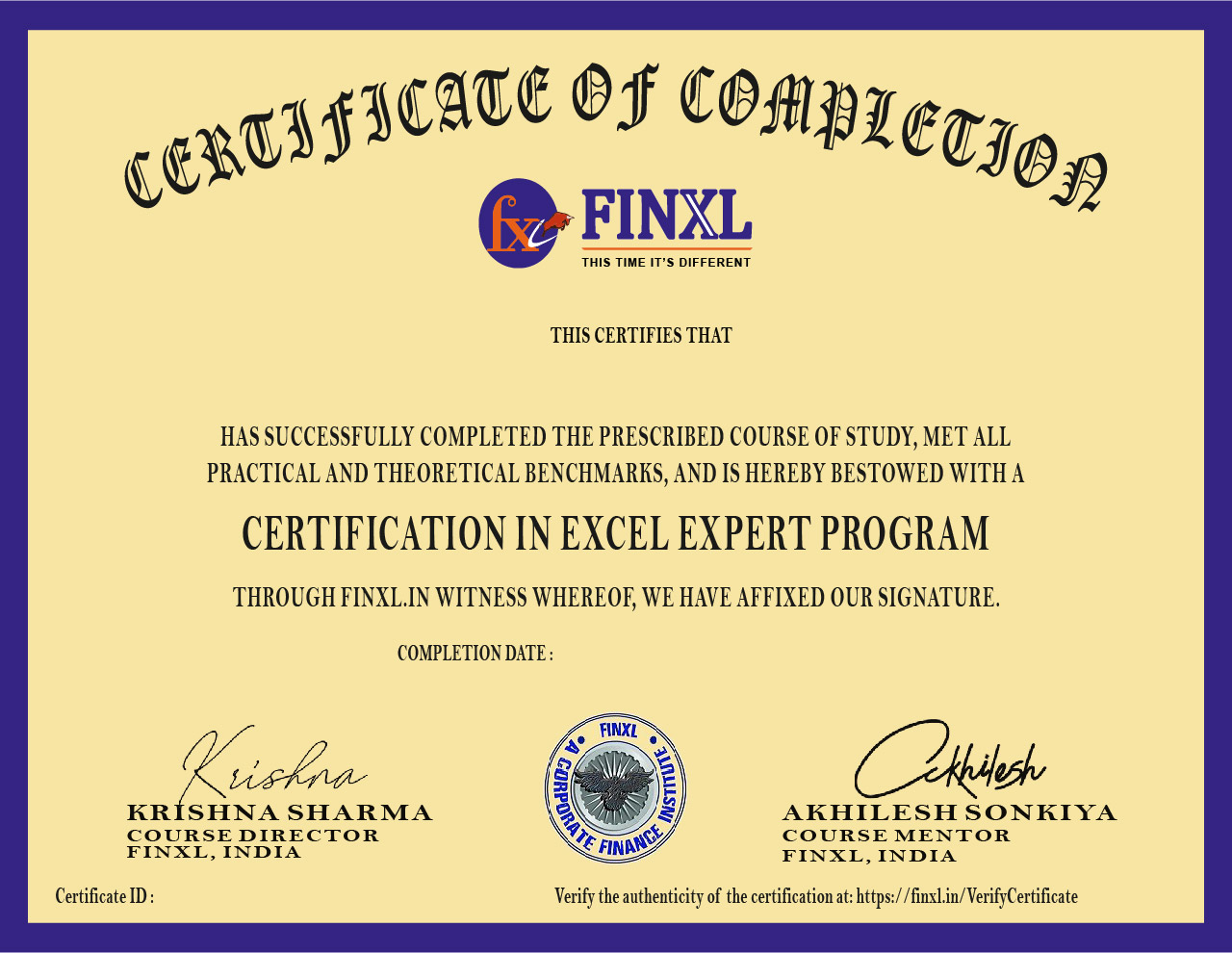
✔ Excel (Basic to Advanced) Certification
– Financial formulas, Pivot Tables, Power Query & automation.
🎓 These certifications strengthen your profile for Financial Analyst, FP&A Analyst, Reporting Analyst, Business Analyst (Finance), and Investment Banking roles.

Financial Analyst – Frequently Asked Questions
- Advanced Excel & Automation (Power Query, Power Pivot)
- Financial Modelling (3-Statement Models, Forecasting Models)
- Budgeting & Variance Analysis (FP&A)
- Power BI Dashboards & DAX
- KPI Reporting & Management Presentations
- Scenario Analysis & Business Decision Support
- Foundation (0–3 months)
- Modelling & Reporting (3–6 months)
- Advanced FP&A & Power BI (6–9 months)
- Industry projects & placement preparation (9–12 months)
The extended duration ensures deep learning, hands-on practice, and job readiness.
- Resume & LinkedIn optimisation
- 10+ mock interviews (technical & HR)
- Case-study interview preparation
- Interview scheduling with hiring partners
- Career mentorship and job search guidance
- ₹4–12 LPA for Financial Analyst & FP&A roles
- ₹5–14 LPA for Reporting & Analytics roles
- Higher packages are possible with strong performance or prior experience